

Actuator Selection Guide: Electric vs Pneumatic vs Hydraulic
1. Introduction
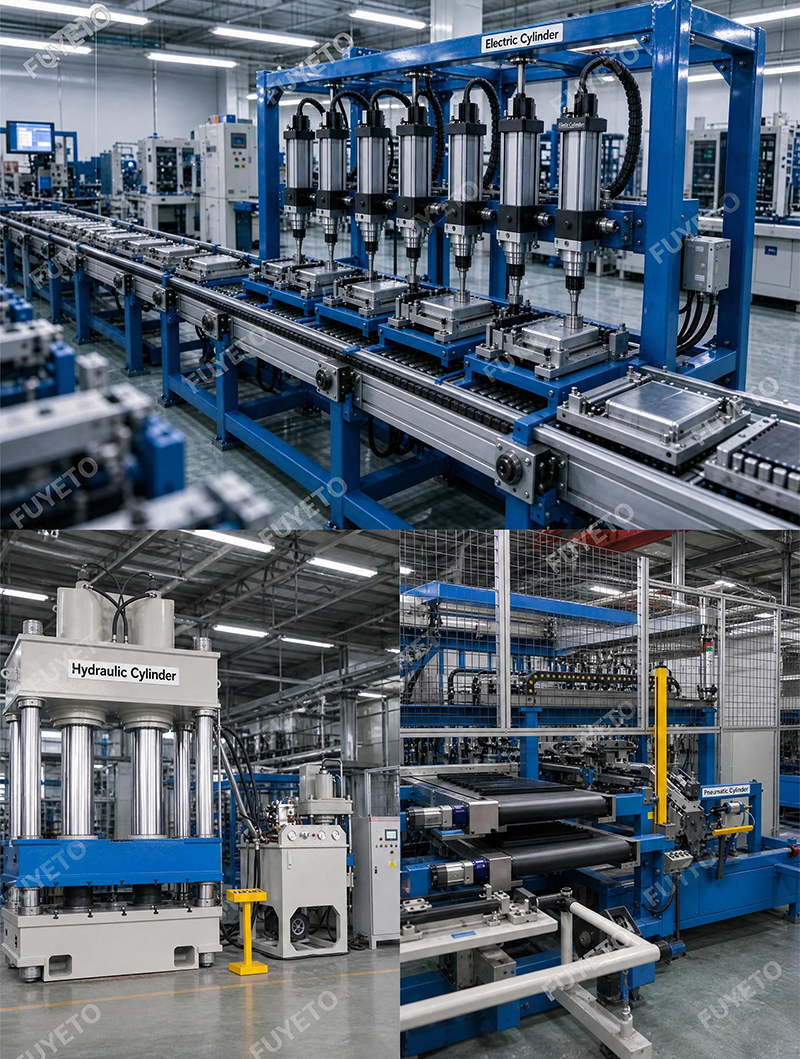
Electric, pneumatic, and hydraulic are the three most common linear actuators in automation. There's no universal 'best'—just the one that fits your application. Pick the wrong type and you either overpay for what you don't need, or underpower the system and miss cycle time. This guide compares them across 7 dimensions: force, speed, accuracy, energy, environment, infrastructure, and total cost.
2. How They Work + Quick Comparison
Electric = servo motor + ball screw (electricity → linear motion). Pneumatic = compressed air pushes a piston. Hydraulic = pressurized oil does the pushing. Different working media mean different force, accuracy, and efficiency profiles. Table 1 summarizes the key numbers at a glance.
Table 1 Key indicator comparison of electric, pneumatic and hydraulic actuators
| Comparison | Electric | Pneumatic | Hydraulic |
| Working medium | Electric energy (motor + screw) | Compressed air | Hydraulic oil |
| Force output | Medium-high (motor & ratio dependent) | Medium-low | Extreme (≈25× pneumatic at same size) |
| System efficiency | 80%–90% | 10%–20% | 45%–60% |
| Positioning accuracy | High (closed-loop, feedback) | Fair | Good |
| Speed & cycle | Medium-fast | Fast | Medium |
| System complexity | Low (no pump/air supply) | Low–medium (needs air) | High (pump/valves/piping) |
| Initial cost | Higher | Low | High |
| Operating energy | Low (works on demand) | High (leaks, low efficiency) | Medium |
| Environment / explosion | Needs hazardous-area cert (costly) | Intrinsically safe (no electricity) | Needs fire-resistant fluid |
| Maintenance | Low (low-maintenance, quiet) | Simple (replace seals) | Medium (fluid management, leaks) |
3. Choosing by Requirement
3.1 Force Output
Start with how much force you need. Pneumatic tops out around 0.5–0.8 MPa—fine for light-to-medium loads. Hydraulic runs at ~2,500 psi and delivers about 25× the force of a same-size Pneumatic Cylinder—this is the heavyweight. Electric sits in the middle-high range, depending on motor and gear ratio. Force is the first filter.
3.2 Speed and Cycle Time
Pneumatic is the fastest and simplest—perfect for high-speed reciprocation and high cycle rates. Hydraulic is medium speed, slower in heavy-duty roles. Electric is medium-fast, with controlled acceleration/deceleration. For fast, light, simple motion → pneumatic wins.
3.3 Positioning Accuracy and Control
Electric is the accuracy king: closed-loop control of position, force, and speed, with real-time feedback. Great for precision pressing, positioning, and multi-axis sync. Hydraulic can do proportional control with decent accuracy. Pneumatic is hard to position precisely—usually just hits end stops. Need precision? Go electric.
3.4 Energy and Operating Cost
Electric runs on demand at 80%–90% efficiency—no wasted energy. Pneumatic is the least efficient at 10%–20%, with constant air compression and leak losses. Hydraulic sits in the middle at 45%–60%, but the pump runs continuously. For long runs and energy savings, electric has a clear edge.
3.5 Environment and Safety (Explosion)
In explosive or flammable areas, pneumatic is intrinsically safe—no sparks, low cost. Electric needs expensive explosion-proof motors and certification. Hydraulic requires fire-resistant fluids. When safety rules matter, pneumatic is usually the most economical pick.
3.6 Installation Space and Site Infrastructure
Electric needs nothing but a power outlet—no pump, no air line, no piping. Saves space, quiet, low-maintenance. Pneumatic needs a reliable compressed-air supply. Hydraulic needs a pump station, valve bank, and oil system—takes up room and adds complexity. If you already have air or hydraulics on site, using them avoids a big upfront investment.
3.7 Maintenance and Total Cost of Ownership (TCO)
Buy price vs total cost: electric costs more upfront, but uses less energy and needs less maintenance—usually lowest TCO. Pneumatic is cheap to buy and simple to fix, but long-term energy bills add up. Hydraulic has high initial cost plus ongoing oil and leak management. Don't just look at the price tag—look at 5-year cost.
4. Scenario-Based Recommendations
Common use cases at a glance (Table 2):
Table 2 Scenario-based recommendations
| Typical application | Preferred | Reason |
| Precision pressing / positioning / synchronization | Electric | Accurate, force-controlled, multi-axis sync, feedback |
| High-speed gripping / fixtures / transfer | Pneumatic | Fast, simple, low cost |
| Heavy-duty press / construction machinery / heavy push | Hydraulic | Extreme force, high force density |
| Explosion / flammable workstations | Pneumatic (or certified electric) | Intrinsically safe, no sparks |
| Long continuous running / high energy efficiency | Electric | High efficiency, low TCO |
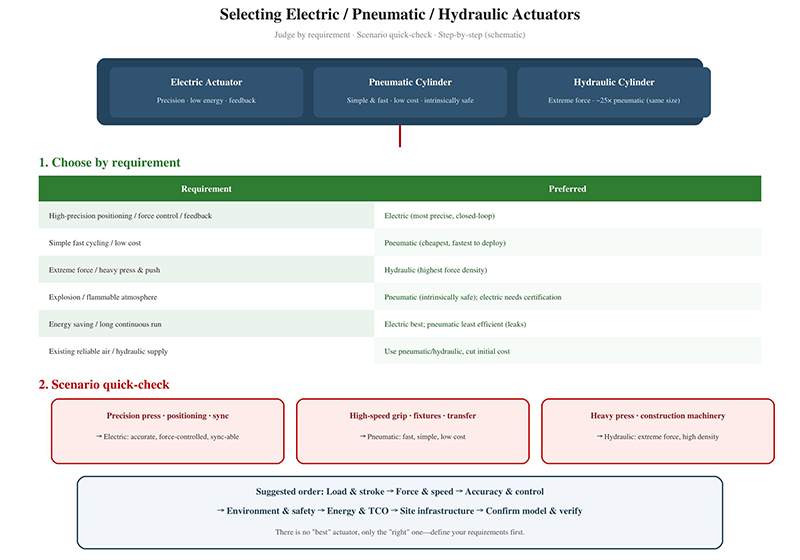
Figure 1 Actuator selection guide — decision-path diagram
5. Selection Steps and Checklist
5.1 Selection Flow
Follow these steps: define load & stroke → figure out force & speed → set accuracy requirements → check environment/safety → estimate energy & TCO → check existing infrastructure → pick a model and verify. Quantify everything before choosing—don't just go by gut feel.
5.2 Selection Checklist
(1) Is force enough with margin? (2) Is speed/cycle time fast enough? (3) Do you need closed-loop positioning or force feedback? (4) Any explosion-proof or cleanroom requirements? (5) Are long-term energy and leak losses acceptable? (6) Is there existing air or hydraulic supply on site? (7) Is total cost (purchase + energy + maintenance) optimized? (8) Have you verified against manufacturer data?
6. Summary
Electric wins on accuracy and efficiency. Pneumatic wins on simplicity, speed, and low cost. Hydraulic wins on raw force. Before you choose, quantify your load, stroke, cycle, accuracy, environment, and cost needs. Work through: force → accuracy → energy → environment → infrastructure → total cost. Use the scenario table and checklist, and you'll pick the right actuator without overspending.