





A Complete Manual for Solutions to Typical Problems Encountered with Sensors
Sensors are crucial factors necessary for work of modern technology in industrial automation, IoT applications, smart gadgets, and other industries. The performance and accuracy of sensors is an important property influencing the performance and quality of the whole system. It goes without saying that various problems may appear in the use of sensors. In this manual, the author analyzes common problems with sensors and solutions found for them.
I. Classification of Common Sensor Problems
1. Problems with an Output
- No signal change in the output: possible malfunction of the sensor or the system
- Signal fluctuation or large spikes: probably occurs due to interference or malfunctioning of the sensor
- Drift of signal: caused by aging of the sensor or environment fluctuation
- Difference between signal and real value: results from improper calibration of the signal.
2. Problems with Electricity
- Absence of output signal: caused by malfunction.
- Abnormal supply voltage: possible problem for the sensor
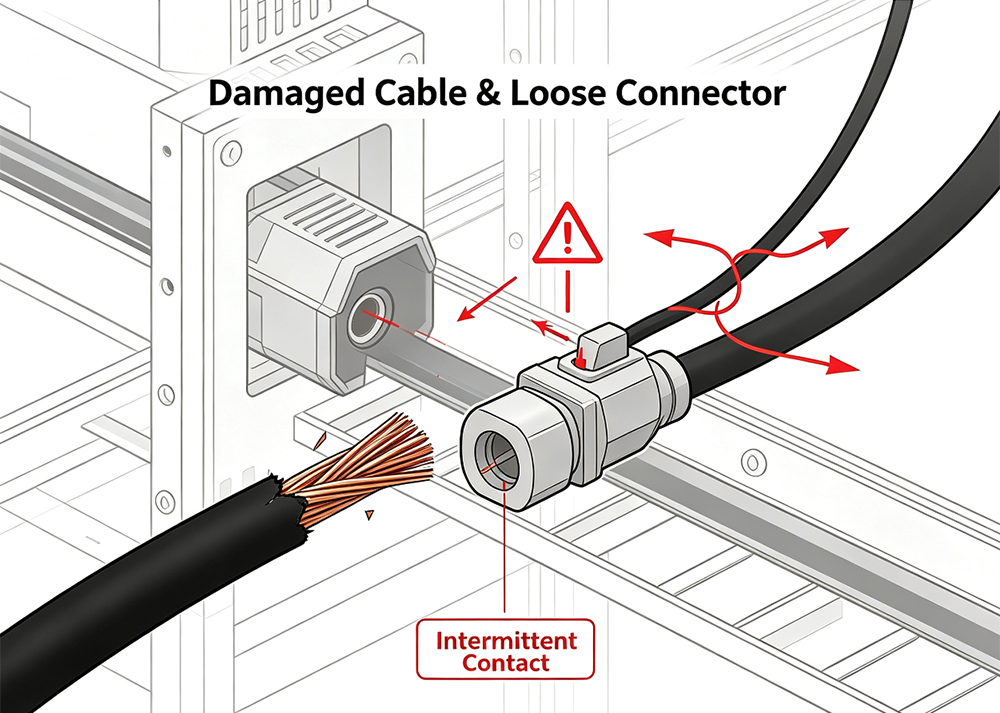
- Short circuit/open circuit: causes failures in wires
- Electrical interference translating into distortion of signal: the problem is widely spread in industrial conditions.
3. Problems connected with Environment Adaptability of the Sensor
- Temperature influence causing less accuracy: requires temperature compensation.
- Damage due to humidity and corrosive gases: the sensor must have strong cover.
- Mechanical loosening due to vibration and shocks: needs strong installation of the sensor. Mechanical and Installation Issues
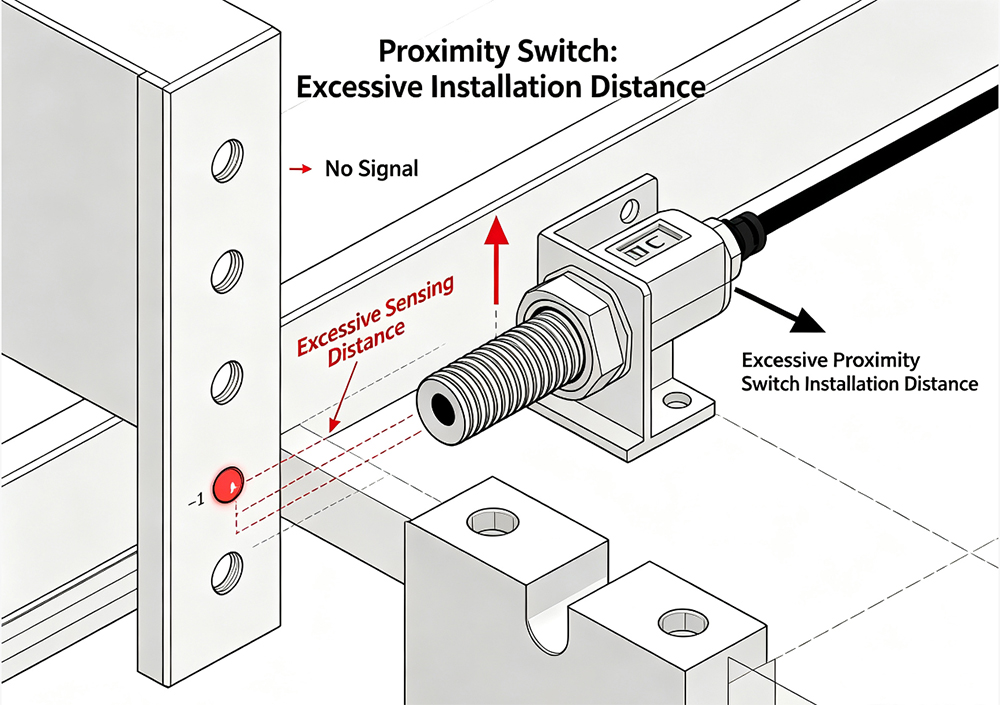
- Wrong Installation Spot: Affects Precision.
- Incorrect Distance from Target: May Impact Sensor Performance.
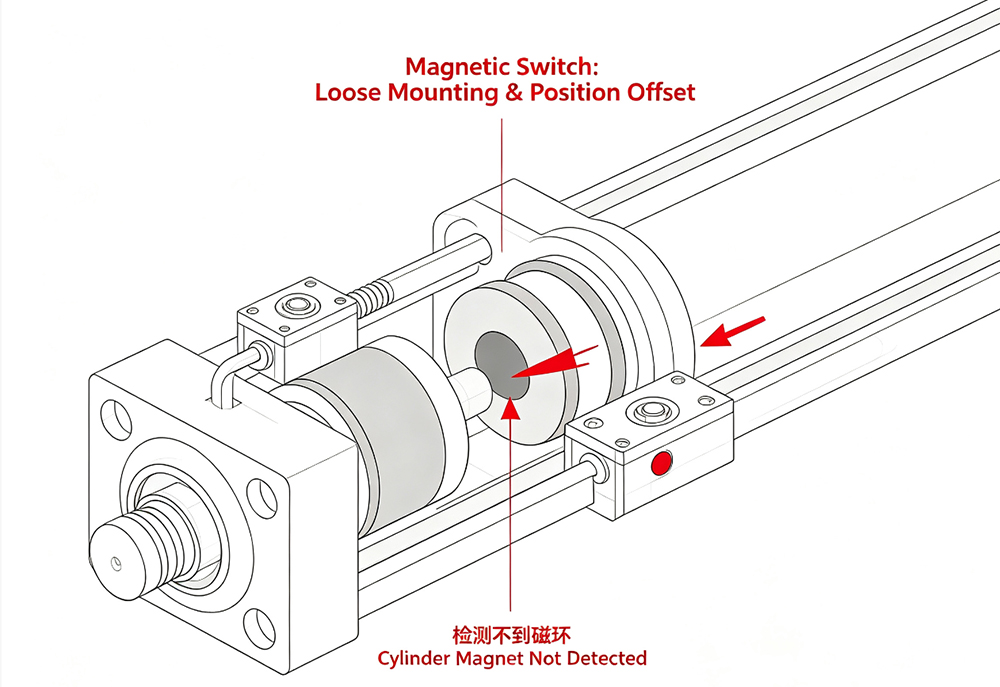
- Loosening from Lack of Tightening: Impacts Measurement Stability.
- Incorrect Wiring: Can Create Errors or Prevent Operation.
II. General Approach to Troubleshooting
1. Verify the issue: Describe fault signals and find out whether these are happening occasionally or constantly.
2. Move from outside to inside: Start the checks from the power supply and other connections and only after examine the sensor itself.
3. Move from the easy to the hard: Clear out the simpler problems before starting the more complicated analysis.
4. Compare with the good one: Use the working sensor of the same kind to cross-check.
5. Write it down: Keep records of reasons for bugs and appropriate measures.
III. Frequent Faults and Remedies
Fault 1: No Signal from Sensor
- Possible Reasons: Problems with Power Supply, Faulty Wiring, Damaged Sensor.- Remedies:
1. Check if the power supply is connected and measure the voltage using a multimeter.
2. Check wiring and connection for faults.
3. Inspect cables for breaks and change if necessary.
4. Use a new sensor to test.
5. Check fuses and power module.
Fault 2: Signal Fluctuation
- Possible Reasons: Electromagnetic Interference, Grounding Problems.
- Remedies:
1. Keep the cables away from the power supply lines.
2. Use shielded wires with grounding on one end.
3. Use filters to stabilize voltage.
4. Ground the system correctly.
5. Use signal isolators for analog signals.
Fault 3: Zero Drift/ Large Deviation in Measurement
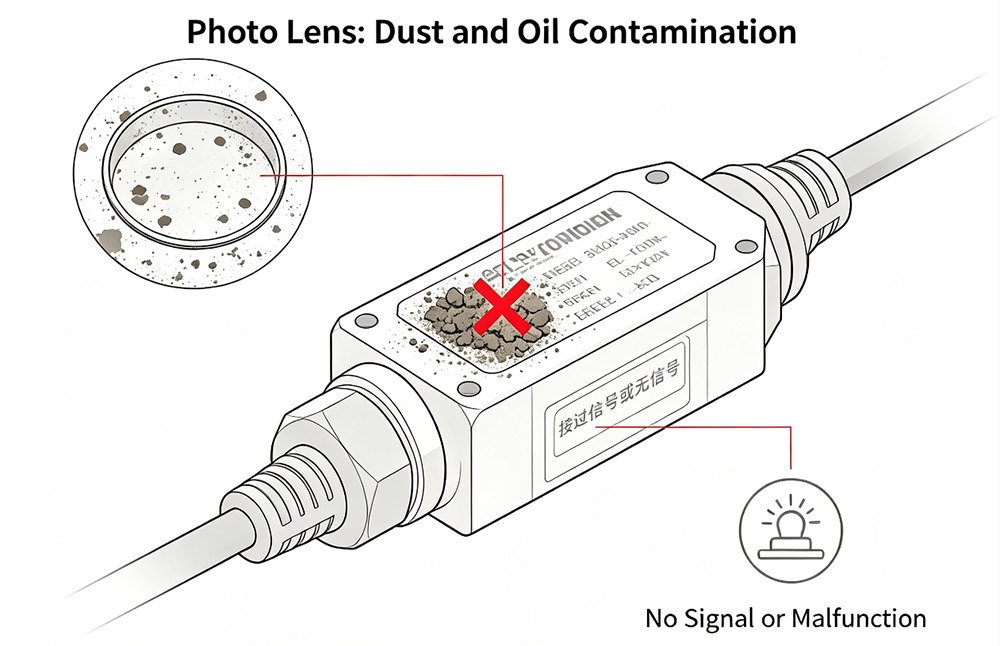
- Possible Reasons: Effects of Temperature, Sensor Wear, Pollution.
- Remedies:
1. Observe and compensate ambient temperature.
2. Clean sensor surface regularly.
3. Recalibrate the sensor as required.
4. Prefer models with a low drift to have good stability.
Fault 4: Temperature Affects the Sensor
- Possible Reasons: Insufficient Protection, Condensation.
- Remedies:
1. Choose sensors that have appropriate protection classes, e.g. IP67.
2. Use anticorrosion material for casing.
3. Include protective features such as covers or dehumidifiers.
Fault 5: Short-Circuit and Incorrect Wiring
- Possible Reasons: Wrong Wiring, Reversed Poles.
- Remedies:
1. Compare pin functions with the manual.
2. Make short-circuit test.
3. Inspect cables and change the damaged ones.
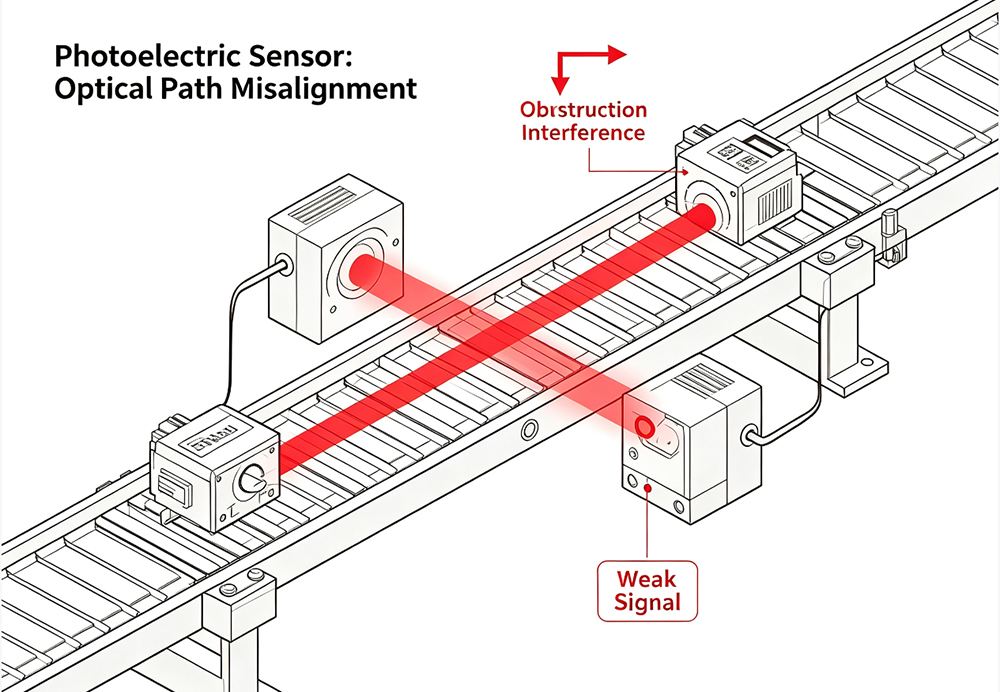
Fault 6: Abnormal Detection due to Mechanical Installation
- Possible Reasons: Wrong Distance or Angle, Bad Installation.
- Remedies:
1. Place the sensor in the proper range.
2. Calibrate the installation angles as per the installation manual.
3. Fix the sensor with suitable mounting tools.
IV. Preventive Maintenance Tips
- Carry checks of wiring, sensor being clean and fixtures.
- Carry out regular calibration once in six months or every year.
- Control environmental conditions such as temperature, moisture, and dust.
- Have spare parts available.
- Teach workers the working principles and how to troubleshoot the problems with the installed sensor.
- Make sure to choose the right type and specifications of sensors.
V. Conclusion
Correct detection of faults means analyzing the symptom, finding the reason and appropriate solution. Faults occur mainly in the power supply unit, wiring, installation, and environmental conditions; thus a structured approach to troubleshooting, scheduled maintenance and proper selection of a sensor will increase the reliability and durability.